
Counting the Value, Sharing the Gain: From Cost-Benefit Analysis to Business Models
Buildings are no longer passive consumers in the energy system. Equipped with self-generation, flexible assets, battery storage, and smart controls, they can actively respond to electricity market signals by shifting loads, storing energy, and trading flexibility back into the grid. But recognising this potential is only the starting point. The real question is: what is it actually worth, and how can it be turned into a scalable economic proposition?
This is precisely what Work Package 7 of BlueBird is designed to answer. At its core lies a Cost–Benefit Analysis (CBA) framework developed to quantify the theoretical flexibility value that pilot sites can offer under favourable operating conditions. As a first step, mapping physical energy flows clarifies how electricity is generated, stored, converted, and consumed within each pilot site.
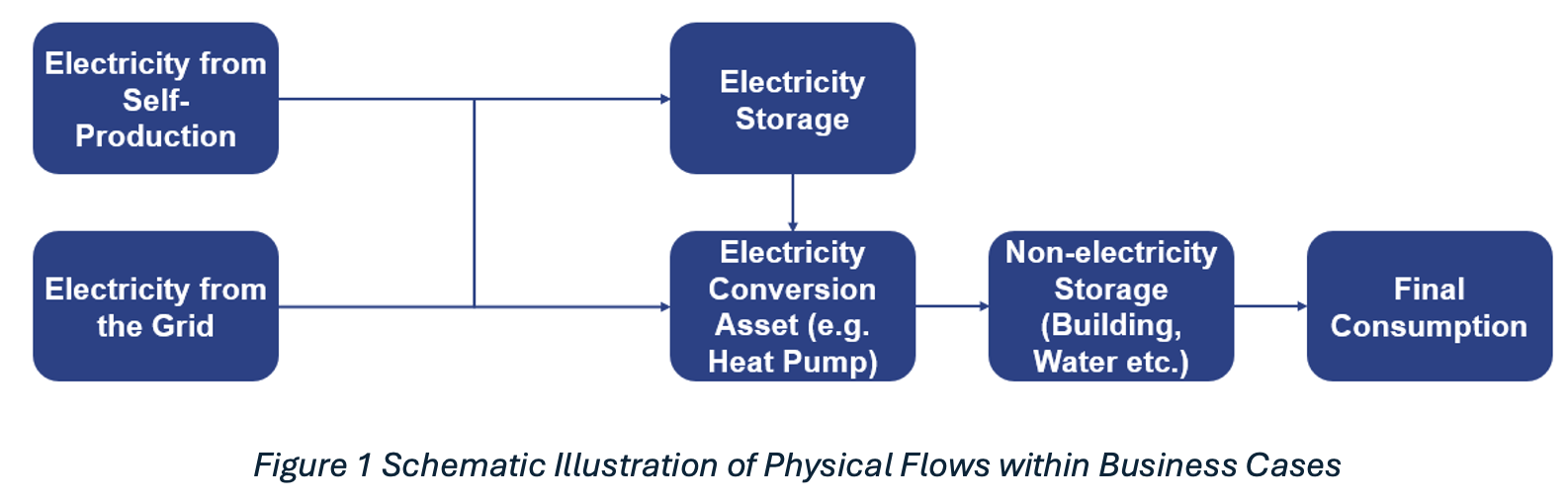
These flows are then translated into a linear optimisation model which, drawing on historical market price data and measured load profiles, calculates an economic upper bound as the maximum revenue achievable if a pilot asset were operated with perfect foresight, full user acceptance, and minimal organisational friction. This optimistic reference case is not a prediction of what will happen, but a rigorous benchmark against which real-world outcomes can be meaningfully assessed. First results indicate promising potentials that will be further evaluated and published in the upcoming months.
Numbers alone, however, do not make a business. To understand how value is actually created, distributed, and captured, the CBA is embedded within a broader analytical picture. Physical flows are therefore complemented by detailed illustrations of stakeholder interactions, tracing how buildings, aggregators, suppliers, grid operators, and flexibility service providers exchange information and coordinate actions. Money flow diagrams then reveal how revenues and costs are distributed along the value chain.
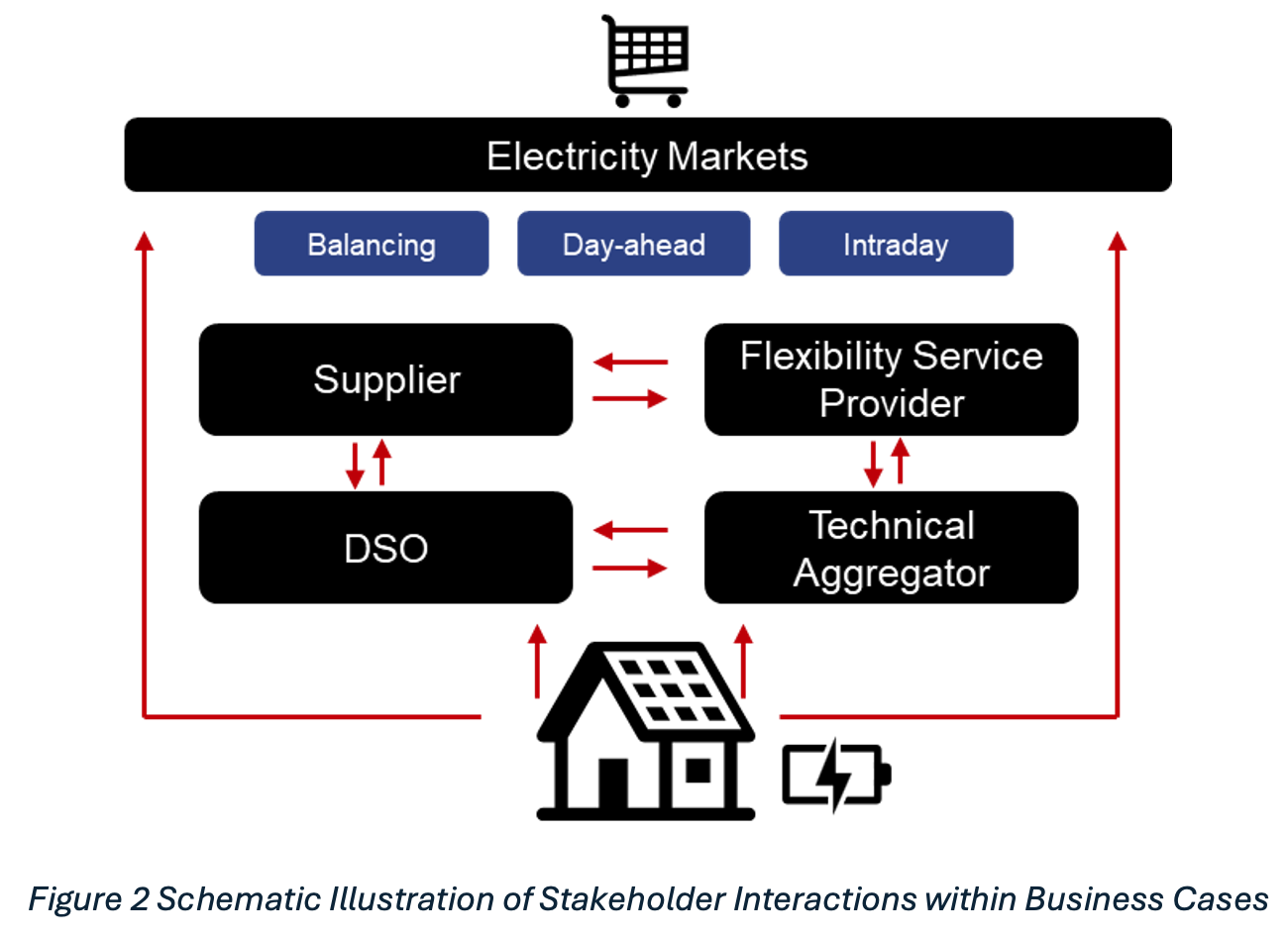
Yet, even a compelling revenue potential will remain unrealised if the underlying business model does not work for everyone involved. Only when the benefits are shared in a way that aligns the interests of all stakeholders, flexibility can be put into practice at scale. The analysis therefore goes beyond identifying viable options, it actively incorporates stakeholder perspectives and develops concrete business models ensuring that identified flexibility potentials can be translated into solutions that are not only economically sound, but genuinely actionable for all parties and therefore scalable.
This business-oriented work is deliberately designed as a complementary pillar to the technical developments pursued across BlueBird's other work packages. While technical streams focus on the algorithms and platforms enabling smart flexibility management, WP7 ensures that these innovations can translate into scalable, market-ready solutions. In this way, BlueBird bridges the gap between cutting-edge research and tangible impact, turning building flexibility into a genuine driver of the energy transition.