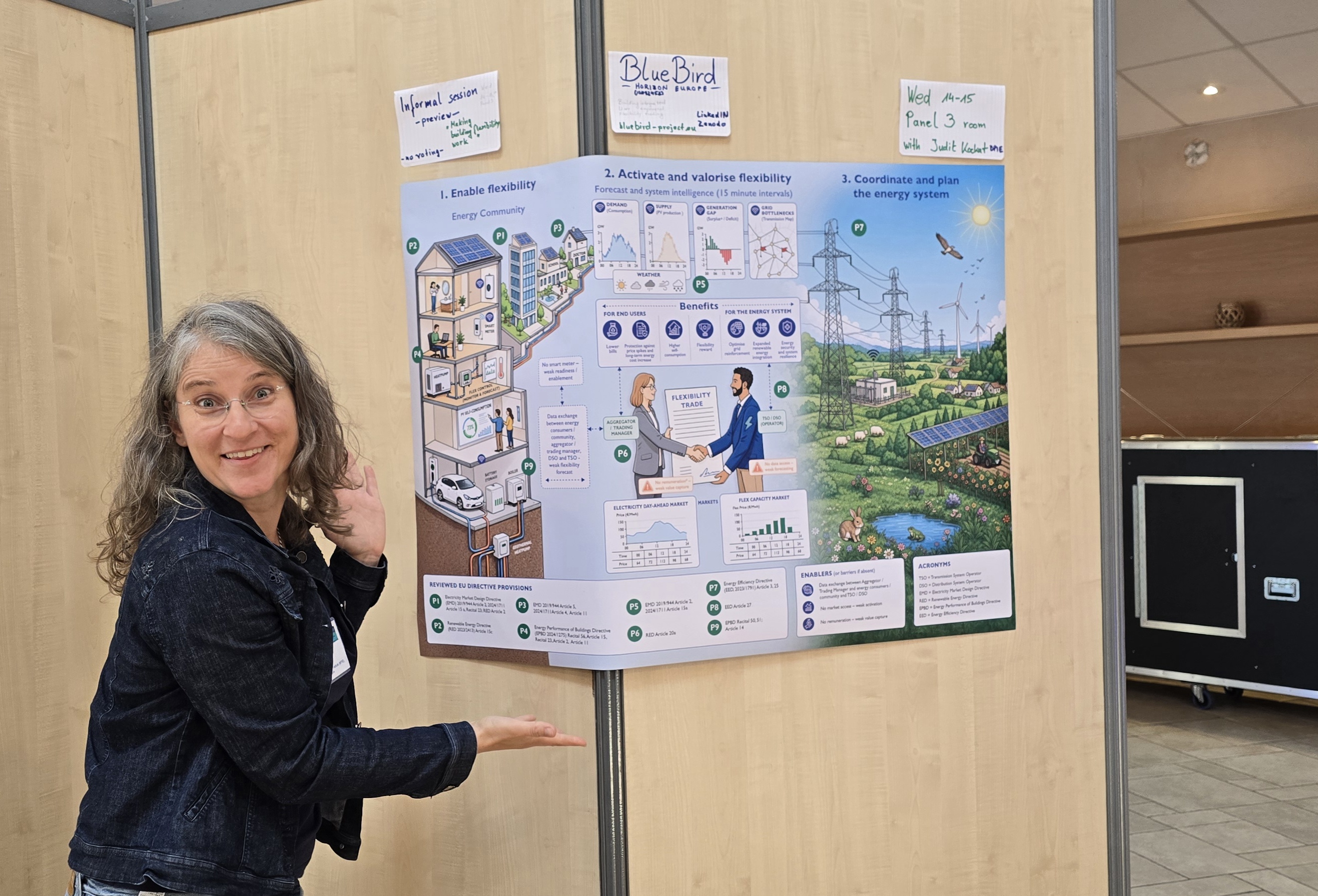
How do we turn buildings into reliable, fair demand-side flexibility assets and make them a force for the EnergyTransition?
This was the central question of our BlueBird Project informal session at the ECEEE summer study 2026 on demand-side flexibility in buildings.
Hosted by Judit Kockat, 20 participants from the energy efficiency community explored which issues need to be addressed at EU level in future revisions of the EPBD, EED, RED III and EMD, and which ones may be better addressed through national implementation.
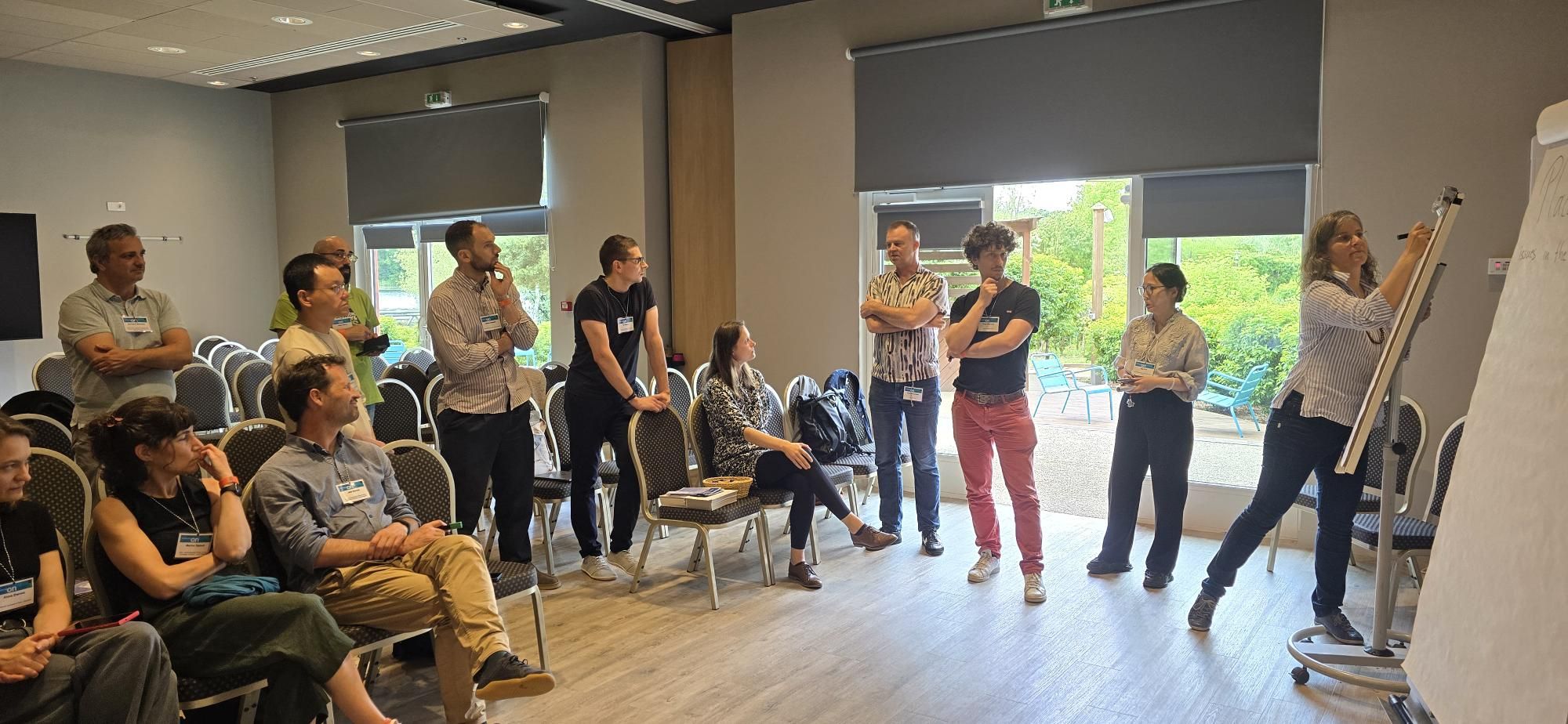
Several priorities emerged:
- Better integration of buildings into energy system planning: Heating and cooling plans but also energy system operator grid planning need to consider demand-side flexibility. This would help create the market conditions for flexible tariffs and services that provide effective incentives for consumers.
- Fair access to flexibility services and benefits: Flexibility must not become an opportunity only for households with the financial means, digital access or technical equipment to participate. Vulnerable households need to be considered from the start.
- Clear and protective aggregator regulation: Aggregators can play an important role in activating flexibility from buildings, but regulatory frameworks need to be developed, which is a complex task as risks need to be considered, for example, to ensure that flexibility actions do not create risks to comfort, health or consumer-protection.
- Risk assessment fit for the energy transition: Current regulatory security definitions may need to evolve as the energy system changes. Carefully adapting these conditions could support lower-cost system pathways with more flexibility, higher renewable energy integration and reduced dependence on fossil fuels.
The discussion confirmed that demand-side flexibility in buildings builds on energy efficiency and can provide a low-cost flexibility resource for the energy system. To enable, activate and valorise this potential, policy frameworks need to better align buildings, consumers and the energy system in a way that is effective, inclusive and future-proof.
A big thank you to everyone that participated!