
Advancing Energy Flexibility in the Barcelona Metropolitan Area: The BlueBird Project Demonstrators
As Europe accelerates its transition toward a decarbonized and resilient energy system, the concept of energy flexibility is gaining strategic importance. Within this context, the Barcelona Metropolitan Area (AMB), through its participation in BlueBird, is leading one of the pilots, focusing on the integration of predictive control, renewable energy, and user engagement across three municipal buildings.
The Pilot Context: AMB's Commitment to Energy Transition
The AMB is the public administration responsible for coordinating services and infrastructure across 36 municipalities, home to over 3.2 million residents. Under its Climate and Energy Plan 2030, the AMB is committed to fostering a decentralized, renewable-based energy model. The BlueBird pilot aligns with this vision by testing advanced energy flexibility strategies in real-world settings, with the potential for replication across the metropolitan territory.
Moreover, the involvement of Barcelona Energia — the metropolitan public energy utility — ensures that the insights gained from the pilots can inform future service offerings and policy development. The participation of research institutions such as CIMNE further strengthens the scientific and technical foundation of the project.
The Buildings: Three Complementary Testbeds
The pilot involves three distinct public buildings, each offering unique technical and operational characteristics:
Illa Esportiva Castellbisbal (Castellbisbal Sports Centre): A high-consumption facility with an indoor heated pool, gym, and EV charging infrastructure. It includes two photovoltaic (PV) installations totaling nearly 108 kWp and is exploring the use of water systems (DHW and pool) as thermal storage assets.

Centre Civic Virginia Amposta (Sant Vicenç dels Horts): A civic center dedicated to cultural and educational activities. It is equipped with a large heat pump system and thermal inertia tanks, managed via a Building Management System (BMS) with remote control capabilities.
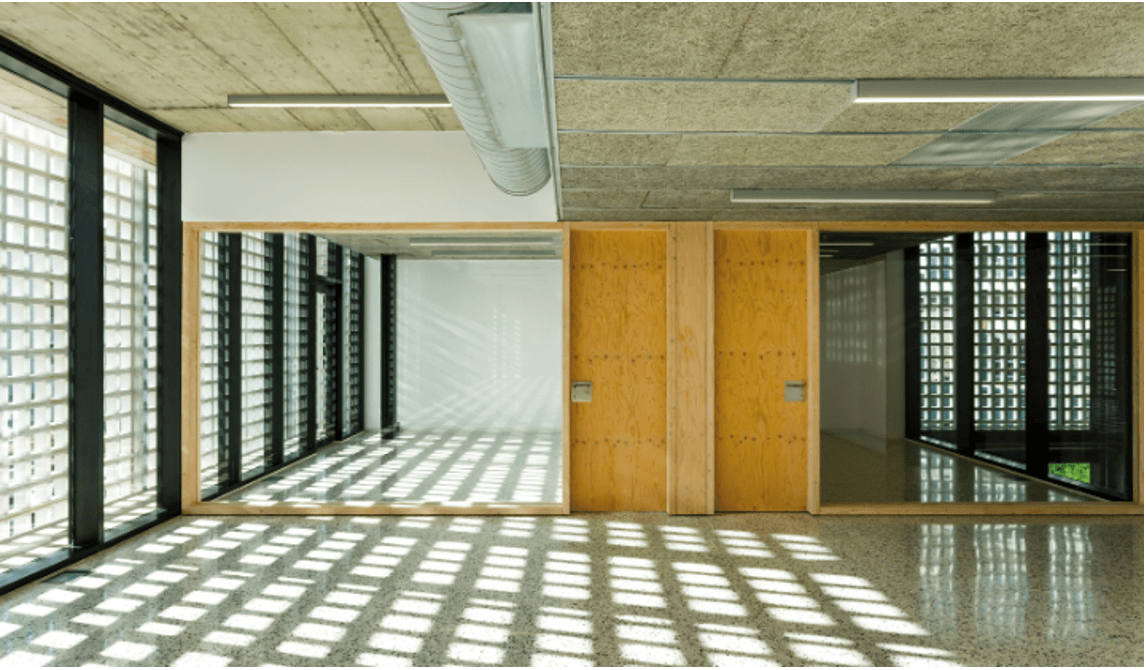
Casa de la Vila (Montcada i Reixac): A historic municipal building with a modernized HVAC system and a fully operational BMS. It serves as a multi-use facility for administrative, cultural, and community functions.
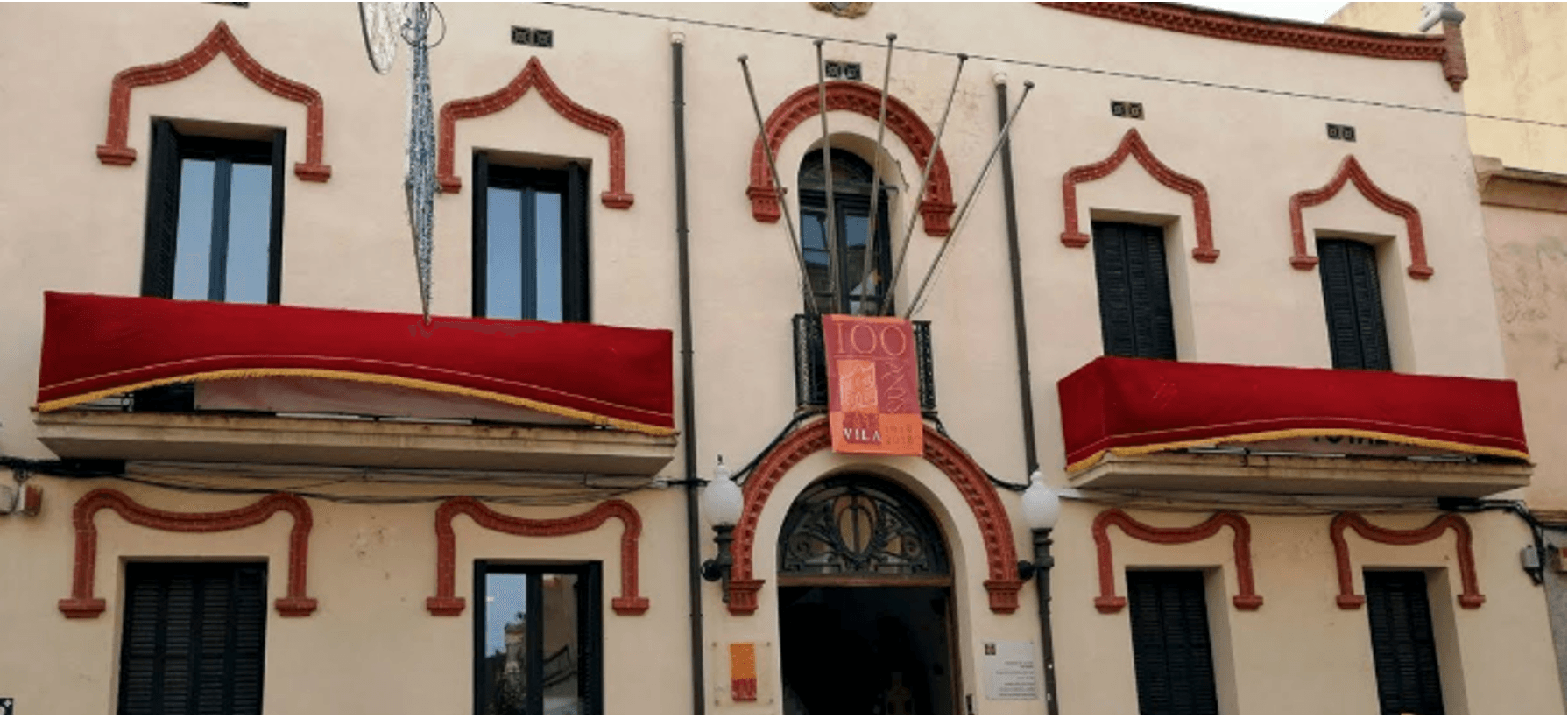
These buildings represent a cross-section of public infrastructure, enabling the project to test flexibility strategies under diverse usage patterns, technical constraints, and user profiles.
Use Cases: From Forecasting to Market Participation
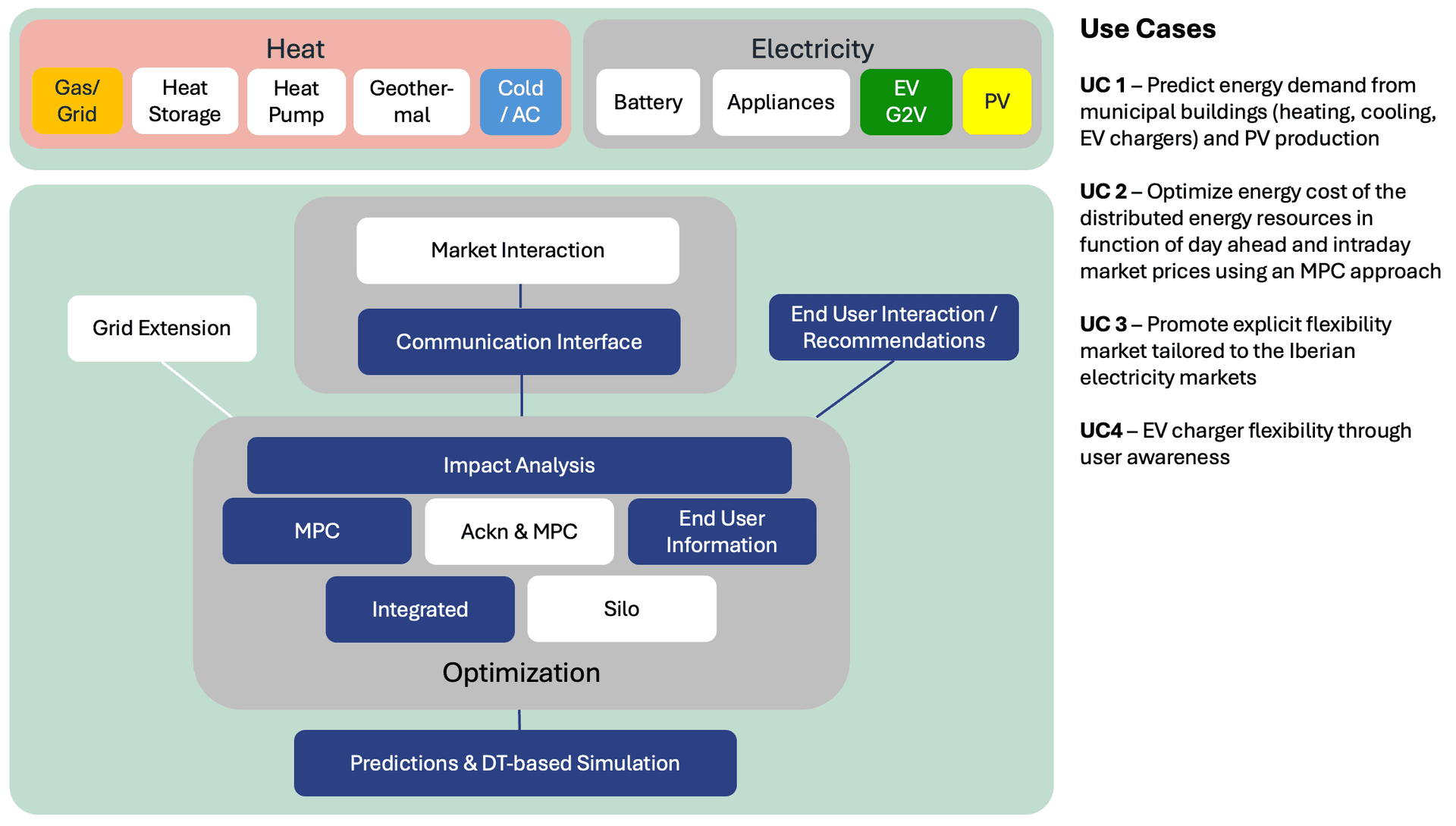
The AMB demonstrator is structured around four interconnected use cases:
Use Case 2.1: Predictive Optimization of Energy Demand
This use case focuses on forecasting the energy consumption and PV generation of the buildings using weather data, occupancy patterns, and historical consumption. The goal is to generate accurate day-ahead load curves that serve as the foundation for flexibility planning. Digital Twins of the buildings are developed to simulate energy behavior and identify control levers, such as HVAC setpoints, EV charging schedules, and DHW production.
Use Case 2.2: Cost-Driven Operation through Model Predictive Control
Building on the forecasting capabilities of UC 2.1, this use case implements Model Predictive Control (MPC) to optimize energy consumption in response to dynamic electricity prices. The control strategy aims to reduce operational costs by shifting loads to periods of lower prices and maximizing on-site PV self-consumption. The MPC system integrates real-time data from the BMS, weather forecasts, and market signals to adjust building operations while maintaining user comfort.
Use Case 2.3: Participation in Flexibility Markets
The third use case explores the potential for public buildings to participate in Spain's tertiary electricity market. By aggregating flexibility from multiple buildings, the demonstrator simulates participation in market-based mechanisms for grid balancing. This includes responding to flexibility requests within 15-minute activation windows and quantifying the economic value of such services. The use case also addresses regulatory and technical barriers to market access, laying the groundwork for future scalability.
Use Case 2.4: Flexible EV charging
EV charging offers significant flexibility because charging can be shifted in time as long as the required state of charge is reached. However, since many chargers cannot be remotely controlled due to software limitations, this use case will rely on user interaction, supported by visual signals and information panels to encourage users to charge when local energy is available.
Technical and Social Dimensions of Flexibility
The pilot emphasizes both technological and human factors. On the technical side, the project involves upgrading BMS systems, installing control devices, and integrating data platforms for real-time monitoring and control. On the social side, the project engages building users—both staff and visitors—through communication campaigns, satisfaction surveys, and behavioral nudges. The aim is to foster a culture of energy awareness and co-responsibility.
Strategic Relevance and Replicability
The AMB pilot is not an isolated experiment. It is designed as a scalable model that can be replicated across the metropolitan area and beyond. By demonstrating the feasibility of integrating energy flexibility into public buildings, the project contributes to broader EU goals related to energy efficiency, renewable integration, and grid stability.
Conclusion
The BlueBird pilots in the Barcelona Metropolitan Area exemplifies how local governments can lead the energy transition through innovation, collaboration, and strategic investment. By transforming public buildings into flexible energy assets, the AMB is not only reducing costs and emissions but also paving the way for a more participatory and resilient energy system.